
June 11, 2026
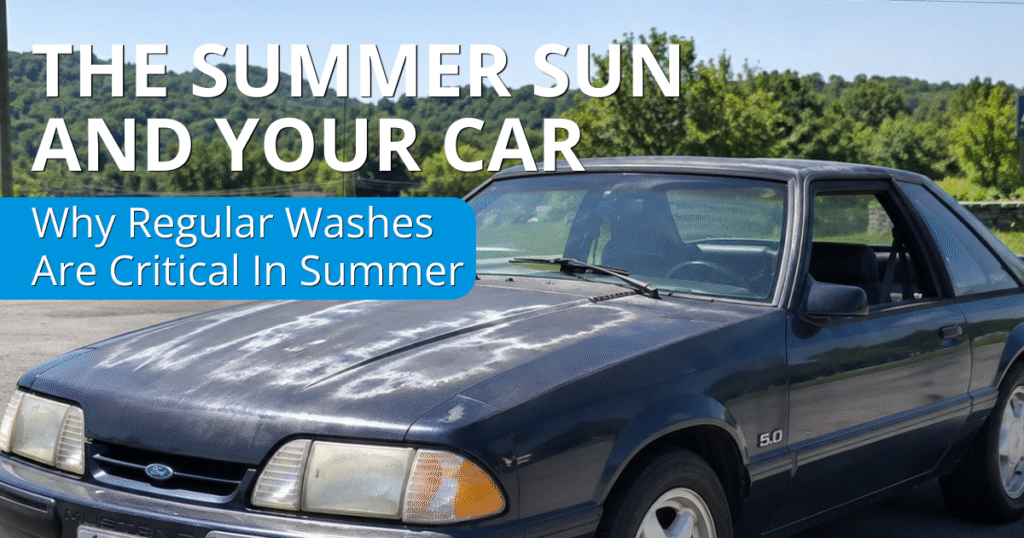
While we typically associate maintenance washing with winter-related contaminants like road salt, summer conditions can still present some unique challenges to maintaining your vehicle’s finish.
Lexington summers tend to look gentle on your vehicle. With the exception of early pollen, dust, and the occasional rainstorm (or not so occasional), summer damage on your vehicle’s finish tends to sneak up on people more than other seasons. The combination of the heat from the summer sun and some common summer contaminants in the Lexington area can lead to real damage over time that can, fortunately, be mitigated with a steady wash routine. Here’s what’s actually going on under that hot Kentucky sun and the exterior of your car.
Your clear coat is the thin, transparent layer that sits over your color and gives it that deep shine, and detailers like to point out that it is only about as thick as a Post-it note while working a lot like sunscreen for your paint. UV rays from the sun can break down the chemical bonds in this layer over time, which leads to oxidization and a dull and chalky finish.
In addition to the UV damage, the summer heat can sharply speed up the oxidization process when temperatures routinely climb above 90 degrees, which describes a good number of summer afternoons around here. If your vehicle is a darker color, that clock runs even faster as dark paint soaks up more heat and fades sooner than lighter shades.
While washing your car regularly doesn’t block UV damage on its own, it does do something just as important through clearing away contaminants that bake into hot paint during summer, leaving lasting marks. The most common contaminant that can cause damage is bird droppings, which are nastier than they look. Bird droppings contain uric acid with a pH between 3 and 4. On a sun-baked roof or door panel, that acid can burn into the clear coat in
a matter of minutes rather than hours. Once it etches your paint, you are no longer dealing with something that a car wash or routine maintenance can fix, and the repair moves on to polishing or, in the worst case scenario, repainting the panel.
Bugs and tree sap follow a very similar script. Bug splatter is acidic, and the longer it sits on hot paint, the more it bakes into the surface of your vehicle and becomes part of the finish you worked so hard to protect. Tree sap works like glue, hardening and bonding to the clear coat so tightly that removing it the wrong way can actually lift coating right along with it.

Pollen deserves its own conversation since Central Kentucky has plenty of it well into the early summer. On its own, the yellow, musty film on the surface of your car is an eyesore, but when left ignored it mixes with moisture and slowly eats away at your clear coat over time. This is why so many washes recommend cleaning once or twice a week during pollen season rather than waiting for it to become a more obvious problem. All of this factors into a simple rule that detailing experts tend to all agree on: A car should be washed about every two weeks under normal conditions, and that pace should accelerate to roughly once a week in spring and summer, when pollen, sap, and bird droppings are at their heaviest. Factor in road trips as highway miles pile on bug splatter and grime that come off far easier when they’re fresh rather than when they’ve been cured by heat.
The practical payoff of washing regularly goes beyond having a good looking ride. The paint degradation caused by those summer road contaminants can seriously harm the resale value of your vehicle, making maintenance washes a much more affordable alternative.
A clean car holds its shine, holds its color, and holds its worth. A full service wash at a trusted operation, like Jeff’s, pulls off the acid and grime before they can settle in. Optional ceramic sealants also add a real layer of defense between your car’s finish and the summer sun. Summer is hard on paint whether you notice it right away or not. The smart move is to keep your car clean and contaminant-free before any damage has its chance to show.
Keep it clean before the damage shows
A full service wash pulls the acid, pollen, and grime off your finish before they settle in, and an optional ceramic sealant adds another layer of defense against the summer sun.